Sunday, 16 March 2014

History and Higos

The history of horticulture is social history. Over millennia the highs and lows of civilisations has been reflected in horticulture, from early 'cottage gardens' where people grew vegetables and herbs (including or even especially medicinal herbs) close to their homes, right through the introduction of ornamental gardens and the landscape movement, and right up to today's gardening styles and trends.

The explosion of exploration in the 19th century brought thousands of new species to the gardens of Europe, many of which were tended by legions of dedicated gardeners, and many of which suffered serious decline after two wars tore Europe apart and decimated the army of labourers and gardeners. In the post-war years, increasing through the 1960s, Britain saw a major change in that more leisure time meant that more people were looking for ways to improve their gardens. Lawnmowers became affordable and accessible, meaning that pristine swathes of grass could be kept, and nurseries catered less for the major land owners and more for the 'man on the street', offering an ever widening range of plants. Garden centres were born, providing easy access to anything the modern gardener might need.
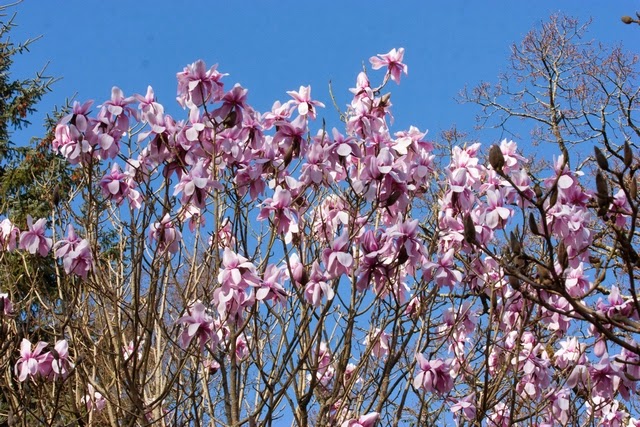
Magnolia sargentiana var. robusta; exotic to us but a native tree in China!
Looking back it's easy to think of horticulture as being a recent thing, but civilisations have been growing things for centuries. In Japan horticulture was traditionally intertwined with customs and culture; one very old Japanese tale tells of a man who had to burn his prized bonsai trees to keep a visiting Shogun warm during a bitter winter, and it can be argued that the concept of growing plants in pots is originally ancient Japanese, with Hepaticas and Asarum popular candidates. Japanese gardens are typically very precise, almost ritualistic; traditional Japanese gardens are often based around landscapes, with key features represented in miniature by stones or particular plants.
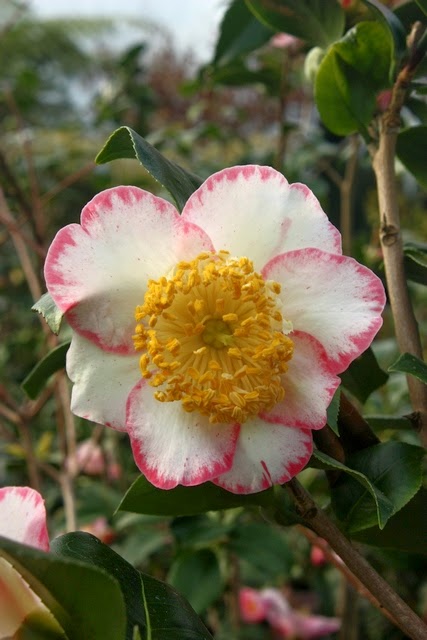
Higo- 'Okan'
If you ask people to think of things connected with Japan sooner or later they will mention Samurai, the elite military noblemen. Far from just being feared and revered noblemen the Samurai, these were clans with their own customs and rites. Revered among the elite of Japanese society, as well as by the Samurai, were a particular group of Camellias, now known as Higo varieties; these varieties were admired for their single flowers which framed a large number of stamens. Often families would have their favourite Higo variety, and these were planted on the graves of family members.
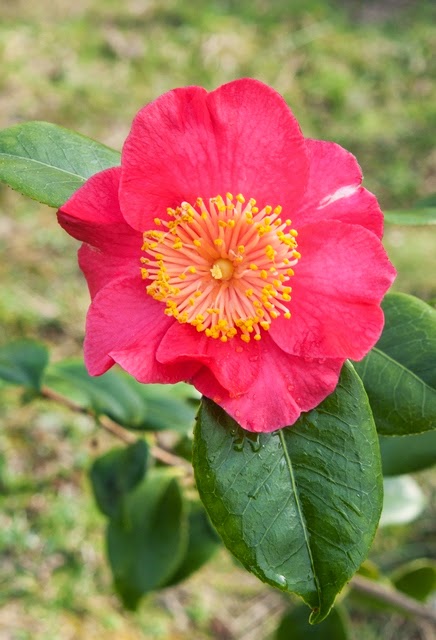
Higo- 'Jitsugetsusei'
Although Japanese culture has changed massively there is still a great affection for surviving Higo types. Best of all the Higo Camellias are simply flower forms of Camellia japonica, so if you can grow Camellias you can grow Higos! 
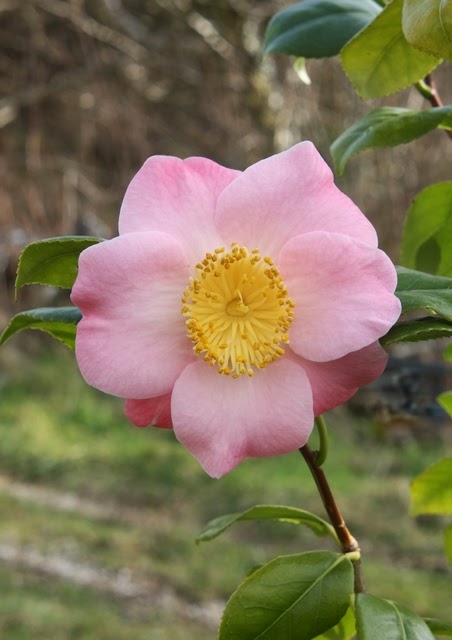
Higo- 'Goshozakura'

Tuesday, 4 March 2014

To label or not to label, that is the question

Anybody who collects plants will have been unsettled by recent news of thefts from gardens, more prominently the brazen theft of the extremely rare and endangered Nymphaea thermarum from Kew, but also thefts from RHS Wisley's alpine collection. Just strike up a conversation about theft among plant people and the chances are that they will reel off examples of plants being stolen from public gardens. The best way to protect specimens might be to leave them unlabelled, but then that spoils the garden for enthusiastic (and honest) gardeners who visit gardens to learn about plants and how they are cultivated.

Impatiens 'Ice Storm' is desirable, but would anyone steal it?
The other question is more to do with private collections; how safe are our own collections from theft? Gardeners are usually more than happy to share information about plants with other enthusiasts, whether on the internet or in person, but how safe is that? Should be be more careful?

I'd say probably yes. Many private collections have interesting, rare and unusual plants that could be seen as desirable to others, and it's likely that labeling our prized plants would make them easier to identify if someone did want to come back and steal them. Increasing security at home is probably a good idea, but sadly the best way to protect our prize plants might well be to make sure nobody knows we have them.

Can you imagine how dull horticulture would be if everyone hid their best plants away, never sharing the joy of growing them with others?

Saturday, 4 January 2014

Retail and media

For many years there has been a feeling in commercial horticulture that the media, particularly I think the TV, should work more closely. In an ideal world a retailer (either a nursery or garden centre) would have plants in stock, and then a gardening programme on TV would then talk about a certain plant and the retailer would simply slap a sign to a display of said plant which says “as seen on...” and the customers would flood in. Certainly it has happened before, but it was never with everything, but certainly doesn't seem to be happening as much these days.

Part of the problem is range; TV programmes have the luxury of being able to descend on a garden and talk at great length about a plant that happens to be looking good for the camera, but in actual terms it is highly unlikely that the plant that they choose will be available all that widely. Let's take, for example, this Camellia 'Bokuhan'...
Camellia 'Bokuhan'- nice, but where can I buy one?
It's a beautiful plant and fairly straightforward to grow (by Camellia standards), but it's also rare. TV crews could show sexy close-up images of it and fire up enthusiasm with the public, but I'd be astonished if there were ANY retailers in the UK able to mobilise stocks quickly enough to take advantage of the demand. Likewise nurseries and garden centres will (nationally) stock an enormous range of plants that never make it onto the TV, despite having their own merits, simply because they don't fit in with the agenda of the programme makers. TV companies create programmes to entertain their viewers and this is how they make their money, not by promoting horticultural businesses. Unless retailers or even the industry as a whole commission their own programming this is how it will remain.

When gardening TV was 'in it's prime' there was a lot less competition from other forms of media. Yes, there were garden supplements in the papers and gardening magazines around, but the internet was still a fairly new thing for most people. When I started in horticulture we had only just signed up for the newfangled broadband, and companies like Crocus and gardening websites like Shoot were merely embryonic thoughts at the back of their creators' minds. If you wanted to be told about gardening and plants you watched the TV. Now you can watch a gardening show on TV while surfing the net for more information and inspiration; in theory gardeners could be sourcing plants they see on screen while they watch the show, but how many people do that? My own suspicion is that people watch the TV and might comment on a plant they see for the 10 seconds it's featured, but then forget about it and go back to their lives. I have been fortunate enough to know nurseries featured on Gardener's World and their stories are the same- people come up and say “oh we saw you on Gardener's World” but the increased status doesn't translate into sales. It's almost as though the programme creates celebrities out of gardeners but not the gardens or plants featured....

There is also a matter of the type of customer. Gardener 1 loves their garden but buys plants when the weather is nice (but not too nice because they'd prefer to be at home enjoying their garden). Spring pots full of perennials bursting with life are the order of the day, but really who would buy plants in winter when there's nothing to see. Gardener 2 loves their garden, and will be out in any weather. Cold winter days are great times to visit the nursery and see if there's anything worth having. These are the people who wander around sales areas in wind and rain, but they are by far in the minority in the modern world. The problem here is that most retailers will agree that the majority of customers are like gardener 1.

The old adage is true; there's no such thing as a free lunch. The media will look after it's own interests first, and retailers would have to be exceptionally lucky or well placed to take advantage. The fact remains that any single feature about any single plant/product is but a tiny drop in a very large media pond. With so many different things vying for the attention of the consumers you have to really work very hard to get your product seen. Of course though, if it rains on the weekend after your plant is featured then most customers will stay indoors and your hard work counts for nothing.

The answer? Yes, even though this is a hopelessly complicated issue I'm going to give an answer. Yes, court the media... but above all 
be your own evangelist! 
I have a saying; blow your own trumpet because nobody will blow it for you- tell everyone by any means possible, through social media, your own Youtube account, and even your own website (you'd be amazed how many companies seem to forget this bit!)! Make sure that everyone possible knows about you, your products/services, and how awesome you are, because nobody else will do it for you.

Tuesday, 31 December 2013

New Year Resolutions

I'm never one for keeping to these things but maybe if I make them public then I might be more likely to keep them...?!

The fact is that I need to work less. As it is I personally take on too many burdens from the company, burdens which are seldom really mine to bear. Worrying about the future is what managers are there for; I should only need to focus on doing my job properly.

I also need to lose some of my weekend commitments. Living on my own I pay for everything myself, so I've ended up working a seven day working week, and it's not good. I'll have to keep a closer eye on finances, but I need to have time where I'm not working in one form or another. This will allow me time to recuperate which will hopefully mean that I am better able to do my 'day job', but will open up time for me to rediscover why I'm in horticulture.

Ouch! Aciphylla sp. in flower at Glendurgan
I live in Cornwall, one of the best counties for gardens, and yet I've never visited the famous garden at Caerhays Castle (home to the original Camellia x williamsii hybrids), nor the up and coming sculpture garden at Tremenheere, or even been to see the stunning Magnolias at Trewidden, and it's been a long time since I visited Tregrehan, Trebah, Glendurgan....

The fact is that I need to live more. That is my New Year resolution.

Happy New Year everyone!

Thursday, 26 December 2013

Bit of a teaser for you...

Look carefully at the three pictures of Camellia flowers below. What do they share in common? (Apart from stamens and petals!)


The answer...?
Several answers on my Twitter account were incredibly close, and in a couple of cases people were spot on! The person who said that they all belong to Camellia sasanqua was right, as was the person who said that they share common parents. Several people were, however, completely spot on! Yes, these three flowers share a root system; yes, they're all from the same plant!

This, folks, is Camellia sasanqua 'Souvenir de Claude Brivet', a fascinating autumn flowering Camellia because it is a botanical 'chimera'. For anyone (like me) with a scant memory of Greek mythology the Chimera was a creature made up of other creatures. Botanically a chimera has two or more genetically distinct types of cell, usually caused by a mutation in the meristem.

This is all very interesting, but for gardeners it is how this characteristic shows itself that is the appeal; Camellia 'Souvenir de Claude Brivet' will flower anywhere from white to solid pink, and with variable degrees of streaking between. It would drive obsessive gardeners mad (and could be used to confuse someone- they'd swear it was pink last year...!) but for me it is a fascinating oddity.

Wednesday, 25 December 2013

Biog Blog

My parents tell me that I was keen on plants from a very early age, and that when I was only four or five years old I could identify and name several garden plants by their botanical name. It's amazing how school takes things away from you; as I grew up those early gardening days drifted further and further back. The pressure of the controlled learning environment of school, coupled with every child's desire to fit in, suppressed my passion for gardening for many years.

My turning point came when I was maybe 13 or 14 years old. At the time we lived in Snowdonia, and my dad took me to the then fairly new nursery at Crug Farm near Caernarfon. It was a dull and cold day, and while my dad looked at the plants he was interested in I wandered aimlessly around the sales area. It was there that a little plant caught my eye, Arisarum proboscideum, the 'Mouse Plant'. Beneath glossy arrow-shaped leaves I found a strange structure that looked like the back end of a mouse (complete with tail) digging in the ground. I was fascinated by this plant, bought it, took it home and planted it. I guess like all teenagers my interest wavered, after all it wasn't really 'doing' anything. My tiny plant disappeared, and that was the end of it... or so I thought. Next year it reappeared, bigger and stronger, and that's when I was hooked! 
Here's where it started, Arisarum proboscideum
When I was old enough I took a Saturday and show season job with an Alstroemeria specialist who also grew other things. Here I met Arisaemas, the 'Cobra Lilies', and forged my strong interest in aroids, the members of the Arum family. From this core interest in a fascinating part of the plant world I expanded my interests into all sorts of other interesting plants, including carnivorous plants, alpines and woodland plants.

After sixth form college I was tired of the education world and, very dangerously it must be said, decided to go into work rather than follow the tried and tested path to higher education. Why dangerous? It is a lot easier to show your worth in the real world if you have a piece of paper to prove it! A qualification would almost certainly have made life a lot easier for me.

My first full time proper job was at a garden centre in the North West. Sadly it has now closed down, but I remember my time there fondly. It was quite daunting being part of a small but very busy team; we worked hard together to make sure that our plants were presented well and properly cared for, and that our customers were given good honest advice. Regardless of my own personal interests at the time I was expected (by customers and by my colleagues) to be competent at all areas of horticulture, and it was at this point in my career that I realised something; I love finding out about things! I really enjoy researching different areas of horticulture, whether it be plants, gardens or horticultural techniques.

Since then I have allowed my passion to grow. I now work for a nursery in Cornwall, growing and selling an enormous range of nursery stock. I've continued to expand my knowledge and experience, and I'm involved in most nursery activities! I've also taken up photography, and feel a great sense of satisfaction when I 'bag' a good picture of a plant. Many of these photos I share via my Twitter account (@bensbotanics) and my Facebook page (search for Ben's Botanics), or on my main site www.bensbotanics.co.uk. 

I can't put my finger on just one thing that keeps me fascinated by plants; I marvel at their very intricate lives, from the way their buds burst, their flowers are arranged, the development of their seeds and how they're set, as well as their clever and ingenious ways of simply staying alive. There is a world of interest out there, accessible to anyone with a passion for appreciating the natural world, and all you need to do is look!

I am always glad to hear from other gardeners, as well as answering any questions. I hope that you enjoy my blog.

Ben

PS. No pictures of me? I don't like having my picture taken, so very few exist, certainly no recent ones!

Saturday, 14 December 2013

Testing for topiary

Watching The Great British Garden Revival on BBC recently has stirred me to try out a little project I've been getting round to for about the last five years! Rachel de Thame visited several gardens known for their topiary, and showed viewers how to create topiary shapes out of box and yew (privet also appeared on the show...). I wouldn't say that I'm massively 'into' topiary; I love neatly clipped spheres, pyramids and cubes, will tolerate spirals but would never want to own one, and loathe with a passion racing cars, peacocks, prancing horses, teddy bears... the list goes on! My taste in topiary is not the purpose of this blog.

Yew (Taxus baccata) is a very popular plant for topiary; it's evergreen, can potentially grow nice and big, takes clipping and will grow nice and dense if maintained. This got me thinking about other plants that share the characteristics of yew, and this brought me to a fairly underused genus of conifers, the Podocarpus.

Podocarpus are all native to the southern hemisphere and are recognised by their typically conifer leaves (like broad needles) and their fruits, similar to yew. Some, such as P. salignus, grow into large trees, and others, such as P. henkelii, are too tender to be grown widely in the UK. Thankfully the ones that I would expect to be suitable for topiary are hardy in the UK, although not widely grown at the moment. I picked three varieties, as seen below- 'Young Rusty', 'Kilworth Cream' and 'Red Tips'

L-R 'Young Rusty', 'Kilworth Cream', 'Red Tips'
So why Podocarpus? The varieties I've picked out all have small needles which I hope will give my shapes a smooth outline, and also Podocarpus share a useful characteristic with yew; both will break from old wood, meaning that if I cut thicker stems dormant buds will break and I will get soft new growth that will then be good to trim into shape.

New shoot breaking
At the moment the three plants have been grown (very well it must be said) to be open and shrubby, so I'll start by shortening the long thick shoots back and pruning them within the framework of the plant and hopefully this will give me lots of soft shoots to trim to shape. I'm hoping that in the not-too-distant future all I will have to do is run shears lightly over the plant to keep it in shape.
A tuft of new shoots on 'Kilworth Cream'
One advantage with Podocarpus is that they come in a (small) range of colours. Yew comes in green or gold, but Podocarpus come in bronze, blue, green, cream and a mustard/orange. Podocarpus also do very well in pots, providing they are watered and fed properly, whereas yew tends to sulk if it's contained long term. There are drawbacks though... I'm very much aware that many Podocarpus usually have a fairly coarse texture and an open habit and are more prone to being shrubby than tree-like. This could give me a couple of problems; it's possible that I won't be able to clip them into a decent shape and keep them dense, but also I'm limited to doing fairly small/low shapes. For me the latter isn't a problem because I want to clip them into a set of spheres, but it does limit their potential to be adopted widely as topiary plants.

I'll let you know how I get on!