Wednesday, 4 July 2012

Opinion- Garden makeover shows


I thought the concept of the 'garden makeover' TV show was dead. 

It seemed that the hit BBC TV gardening show Ground Force, presented by Alan Titchmarsh, Charlie Dimmock and Tommy Walsh, had created the perfect concept and then flogged it to death. Ground Force was the garden makeover show.

If you are not familiar with the concept of a garden makeover TV show please let me explain: you find people who are going through profound personal difficulties (bereavement, illness, disability) but who have awful scraps of land as their garden, you send/lure them away from home while a team of gardeners and builders turn their patch of ground into a beautiful garden, and then you surprise them when they come home. Everyone cries, people's lives are made that bit better... everyone's happy.

I cannot fault the garden makeover concept, even though the formula had become very tired by the end of the final series of Ground Force in 2005 (Titchmarsh had already left the series by this point, knowing that the series had already run it's time); what I do not like is the 'a garden in a weekend' angle.
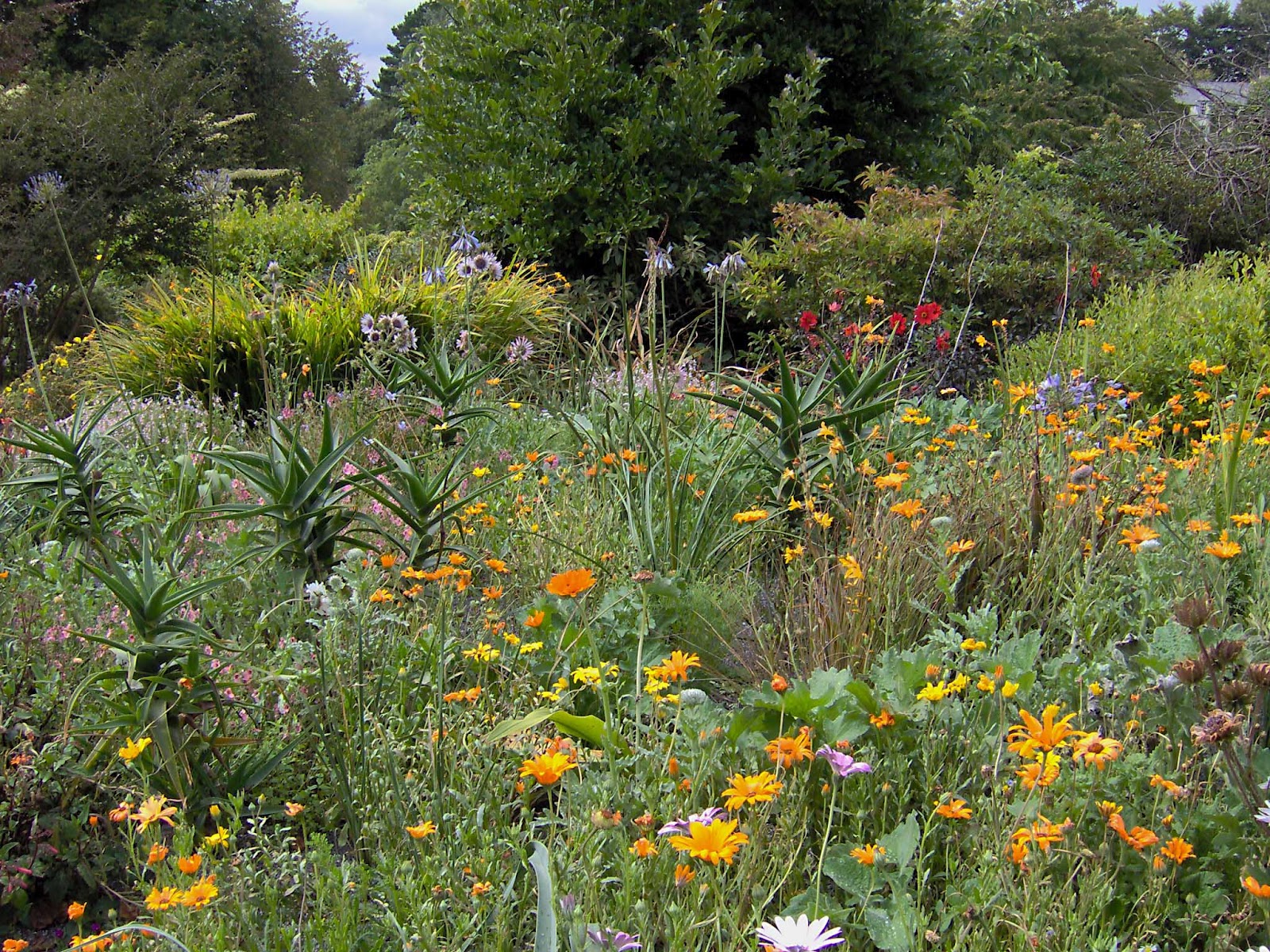
This garden has developed over several glorious years... Garden House, Devon

Gardeners will tell you a garden isn't made, it is matured. You can build paths, raised beds and ponds, and design and plant your beds in a matter of days, but it is only when things are settled and come together that you really have a garden. The enjoyment of gardening comes from the process of creation; finding out that one plant doesn't do well but another thrives, and that certain combinations of colour and form work well, and also the maintenance and development of your space.

I often tell people not to fill their whole gardens in one go. If you visit a nursery or garden centre and fill your garden with all the plants looking nice at one particular time you will find yourself with a garden that looks great for a couple of weeks at the same time each year. Large gardens with lots of different elements can get away with a border that peaks at one point, but in a small garden year-round interest is vital. Spreading your plant purchasing through the year spreads the cost of creating or adding to a garden and allows you to pick the very best plants through the different seasons; combining these plants well in your space will give you interest in your garden all year round. 
Centaurea montana and Persicaria bistorta 'Superba'-
not designed, a happy accident in my friend's garden.
The new series of the ITV programme Love Your Garden is following in the footsteps of Ground Force... in fact the concept and format are virtually identical, it is only really the crew (still led by Alan Titchmarsh!) and the theme music that has changed. I much preferred the last series where Alan visited people with existing gardens and helped them tackle challenging areas (like creating an attractive edge to a pond) where the gardeners weren't happy with the look and needed a little outside help; it seemed more... realistic. Each week's project was practical, achievable and could be useful to anyone facing a similar problem in their own garden. 

When I saw there was a new line-up, including a garden designer and a builder, I was really optimistic that this new series would be teaching us all how to be better gardeners, not just flogging a long-dead horse...

Sunday, 17 June 2012

All you could ever want to know about irrigation...


Plants in pots rely on us almost entirely to supply their needs- being artificially separated from natural soil means that they are unable to send their roots great distances in their quest for food and nourishment. Whether a plant is potted in a garden or a nursery it must be cared for with the same diligence that a person uses to ensure the well-being of an animal. Because plants cannot 'tell' us they are hungry or thirsty means that we must always be looking for the signs, and that we must be ready to act at very short notice.

Watering large numbers of plants by hand is very time consuming, so irrigation systems are installed to save time. Here is an explanation of the methods of irrigation that you will see on most nurseries, either as an employee or a visitor....


On the nursery we have lots of separate areas irrigated by a complex system of pipes and valves controlled by computers (see left); if an area is uniformly dry we assess it's requirements and, if necessary, run the irrigation for an appropriate length of time. Likewise if an area is expected to go dry (e.g. on a dry weekend) we can assess the area's requirements and set up the automatic system to water when we're not around. On a busy nursery the ability to water large areas overnight saves a lot of time and allows staff free access to tunnels etc. during the day without getting wet! Also being able to water areas during the night allows the irrigation cycle and hand watering activities to be spaced out sensibly over 24 hours, spreading water consumption out through the day, which in turn means that we don't need as much storage- this is crucial if you have no mains water!

All irrigation systems use broadly the same principle: run water through a section of the irrigation system (either sprinkles, drip lines or flood beds) for a period of time which has been calculated to allow each pot to receive the necessary amount of water. Let's take, for example, a drip system which delivers 1L of water in 10 minutes; if you need to deliver 10L of water into your pots to water them properly you will need to run the system for 100 minutes to make sure they are watered.

Most of the irrigation on the nursery is done by a network of overhead sprinklers which spread water over the plants from above. These are easy to install and run but are fairly wasteful of water, watering over access routes etc., and wet foliage is often a contributing factor with leaf diseases, where the drop of water on the leaf surface acts as the perfect environment for spores etc. to get growing.
The overhead sprinklers in action!

Overhead sprinklers in a tunnel- basically the same as outside but upside-down!
The more efficient watering technique is a drip line system. Here small tubes deliver water from a header pipe directly onto the surface of the compost, usually with a spike to hold the pipe in place, stop it getting blocked up (which it would do if the pipe was pushed straight into the compost) and guide the water to where it is needed. The advantage of drip irrigation in containers is that the water is delivered to exactly the place where it is needed at the roots, rather than onto leaves, access roads, straight into drains or onto staff! Also by watering straight into the compost the surface of the compost is kept drier, and this makes it harder for weed seeds to germinate. However, these systems are fairly expensive to install but work wonders for larger stock and any stock tied to lines, but on growing areas where plants are smaller and close together this system would just too complicated and unmanageable to be useful.
A typical drip spike...
Flood beds are a different way to irrigate; stock is growing in what is essentially a large watertight tray with a tap at one end and a drain at the other. To irrigate you simply close the drain, open the tap and fill the area to the required depth with water, leave the plants to soak the water up and then drain the area. The advantage of this system is that you can water a lot of plants from below, directly into the compost, without wetting the leaves. Staff can also work around the area without getting wet (unless they fall into the beds!). There are disadvantages though; these beds are fairly costly to put in, must be pretty well flat, and grow slippery algae on the floor of the bed and on the pots (which need to be cleaned before they are presentable for sale). In order to be efficient with water use the water drained from the flood bed must be collected, stored and cleaned to remove unwanted fertiliser or chemicals before being reused- for most nurseries this would be a horrendous expense for little gain.
Note the algae on the tunnel plastic- stray irrigation water can cause problems.
 Here's a table summarising the benefits and drawbacks of different irrigation systems when compared with watering by hand.


Overhead
Drip lines
Flood Bed
Hand Watering
Easy set-up
yes
no
no
yes
Cheap
yes
no
no
mainly labour
Water Efficient*
no
yes
debatable
yes
Suitable For Feeding
no
yes
no
yes
Run-off problems?**
yes
mostly no
algae problems
mostly no
Automatic Control
yes
yes
yes
no
*   do not waste much water.
** excessive run-off can cause problems with mud and/or algae.

Tuesday, 5 June 2012

Urban myth- the unskilled horticulturalist


In 2011 our Prime Minister, David Cameron, made a speech about government plans to encourage people back into work after a long period of unemployment. During this speech he lumped the entire horticultural world into the 'unskilled labour' bracket, much like clearing rubbish and other so-called 'menial' jobs. The fact is that we need street cleaners if we don't want to wade through oceans of our own collective filth in towns and cities, and also there is no such thing as 'unskilled horticulture'.

From time to time I speak to customers with the same problem- they've hired in someone cheap “just to do a bit of tidying”, and these unskilled people have destroyed trees or shrubs, or pulled up emerging perennials, young bedding plants, and even in one case an entire area of runner beans already trained against their supports! These are examples of unskilled gardening... people who haven't a clue getting things very wrong.
The Square Garden at RHS Rosemoor- from design and planting, to day-to-day maintenance, 
this garden has been created and maintained by skilled people.

Horticulture is largely unregulated; although there are qualifications available you can still call yourself a gardener without ever having done any gardening before. Granted not everyone who does not have a horticultural qualification is useless (I myself am self taught, learning skills and techniques through working in horticulture rather from from a textbook at college, and would like to think I know a thing or two about horticulture...), but likewise not everyone who has passed their exams is a good/competent gardener. For anyone hiring a gardener to work on their property it is a real concern; is that person in front of them a skilled gardening expert or just someone with a few tools?! 

Every horticultural job needs well taught skills in order to be carried out properly, whether it be sowing a few seeds at home, or carrying out major tasks in a large public garden or nursery- 'if a job's worth doing it's worth doing properly', as the old saying goes. An example- on the nursery we do a lot of watering by hand (with hosepipes instead of just irrigating everything). Each batch of plants has it's own watering requirements; freshly potted plants need very little water compared with thirsty plants like Escallonia or Ceanothus, and also plants with large flowers (like Camellias for example) can spoil if they are irrigated and their flowers get too wet, so hand-watering helps to keep the crop presentable and hopefully thus saleable! Watering by hand also presents many problems- you have 'the usual suspects' that need watering every day when in full growth, and even within a batch of reasonably damp plants there can be a plant, usually at the back, which needs water. The tricky moment comes when you have to make a judgement; does the plant need watering now, or will it be OK until the next watering shift? That judgement is a skill that takes years of valuable experience to hone....
As these freshly potted plants grow they will need different care regimes and will pose different challenges.

Likewise with weeding; if you are going to clear weeds from an area of garden or batch of plants you must have enough botany under your belt to identify a plant, often from it's leaves and not flowers, and make a judgement call- friend or foe? Get it wrong with these jobs and your customer/manager will be... somewhat displeased!
 Friend or foe- don't get it wrong!

Alan Titchmarsh, that stalwart and banner-bearer for British gardening has stuck his neck out and challenged the Prime Minister's views. Quoted in The Telegraph, Titchmarsh referred to the Prime Minister's comments as not “particularly useful”, and went on to say "[that] the Prime Minister, and others, should consider just what part gardening can play in society. It impacts on those political hot potatoes, law and order, education and health."

To be done properly horticulture takes skill, and lots of it! Practical skills tending a garden or growing plants are every bit as worthwhile as being able to repair a car or speak another language, and it is the ability of gardeners (amateur and professional) and nursery people/retailers to apply their skills that gives Britain it's reputation as a gardening nation.

Long live horticulture!

Thursday, 24 May 2012

The perfectly legal pinching of plants...

Once plants are growing one of the jobs of a grower is to make them shine and be at their very best when they go out for sale. Nobody wants a thin and lanky shrub when they could have a strong, bushy plant instead.

To encourage certain plants to 'bush out' we pinch the tips of their stems; by 'pinch' I mean we remove the topmost growth, often about 3-4" but it can vary greatly according to the species and how it's growing. This action redistributes chemical messengers called auxins in the plants stems and causes dormant buds further down to break make the plant grow bushy.

Take this batch of Olearia traversii (left) and Olearia macrodonta (right)...
As you can see, they are growing away happily in the tunnel...
With each batch you have to 'go by eye' and pinch back the tops on each plant to the same level each time, leaving the whole batch a uniform size. For tough stems you need a pair of sharp secateurs, but most of the time you are pinching out very soft new growth long before it gets woody, so pinching out the shoots with your thumb and forefinger is the easiest, and most importantly the fastest, way to do it.

This all sounds a bit pedantic but is actually very important- can you imagine how annoyed you would be to plant a hedge where some plants were taller to start with than others?! Doing this at home it might seem even more pedantic, but planting out a group of plants of a roughly uniform size will be more aesthetically pleasing, so pinching out new growth to create uniform bushy plants is well worth doing.

The pinched plants are then loaded to be hardened off outside- the soft new growth has mostly been removed, so hopefully as the new shoots appear they will be tough enough to stand up to conditions outside the polytunnel.
Off they go- Olearia macrodonta pinched back and loaded on their trailer for the short trip to the outdoor
 growing area. The pot in front contains all the pinched shoots from this load alone!
Also on my 'urgent' list of plants to pinch back are the Camellias, particularly varieties prone to making long growths in spring at the expense of growing bushy.
Camellia 'Les Jury'- just admire that fabulous new growth... before I pinch it back! 
Still, as I pinch the new growth back I can squash these little sods before they become a plague! 
When it comes to garden pests prevention is better than a cure...

Ben


Sunday, 20 May 2012

Hidden details

When we're potting or handling plants at the nursery we very occasionally notice something interesting about the root systems of the plants that we're handling.

We're quite used to the lovely citrus smell of disturbed Magnolia root systems, but more recently a perennial plant to us gave us quite a surprise.

Kniphofias ('Red Hot Pokers') have fluorescent yellow roots that look like the result of some sort of experiment... take this young plant of Kniphofia rooperi:
And here's a close-up of it's roots:
Not the best picture as you can see, but just look at the colour of those roots! We're quite used to this feature of Kniphofias, after all we notice it every time we turn plants out of their pots to see if they're rooted.

Every so often we have a few plants of another South African, Wachendorfia thyrsiflora, and this has fluorescent orange roots. Again, here is the plant:
 And a close-up of it's roots:
I for one have no idea why these plants have evolved such brightly coloured roots, and would be open to sensible suggestions... all I know is that enjoying the little remarkable details of the plants we grow is one of the perks of the job.

If you would like to see this and other Wachendorfias in the wild I would recommend a quick look here.

I know, not very exciting but a bit of fun anyway.

Ben

Pots and Polytunnels- an introduction

After much deliberation I have now motivated myself to create a blog. As a professional grower for a nursery in Cornwall I get to learn a lot about the plants that I am growing, as well as a lot about the trials and tribulations of growing plants for other people.

A little background; we're a small team on a fairly big nursery. We grow trees, shrubs, perennials, the occasional bulbs... no annuals. Our stock ranges from the 'bone hardy' to the very tender, from the easy to grow through to bl**dy nightmares!

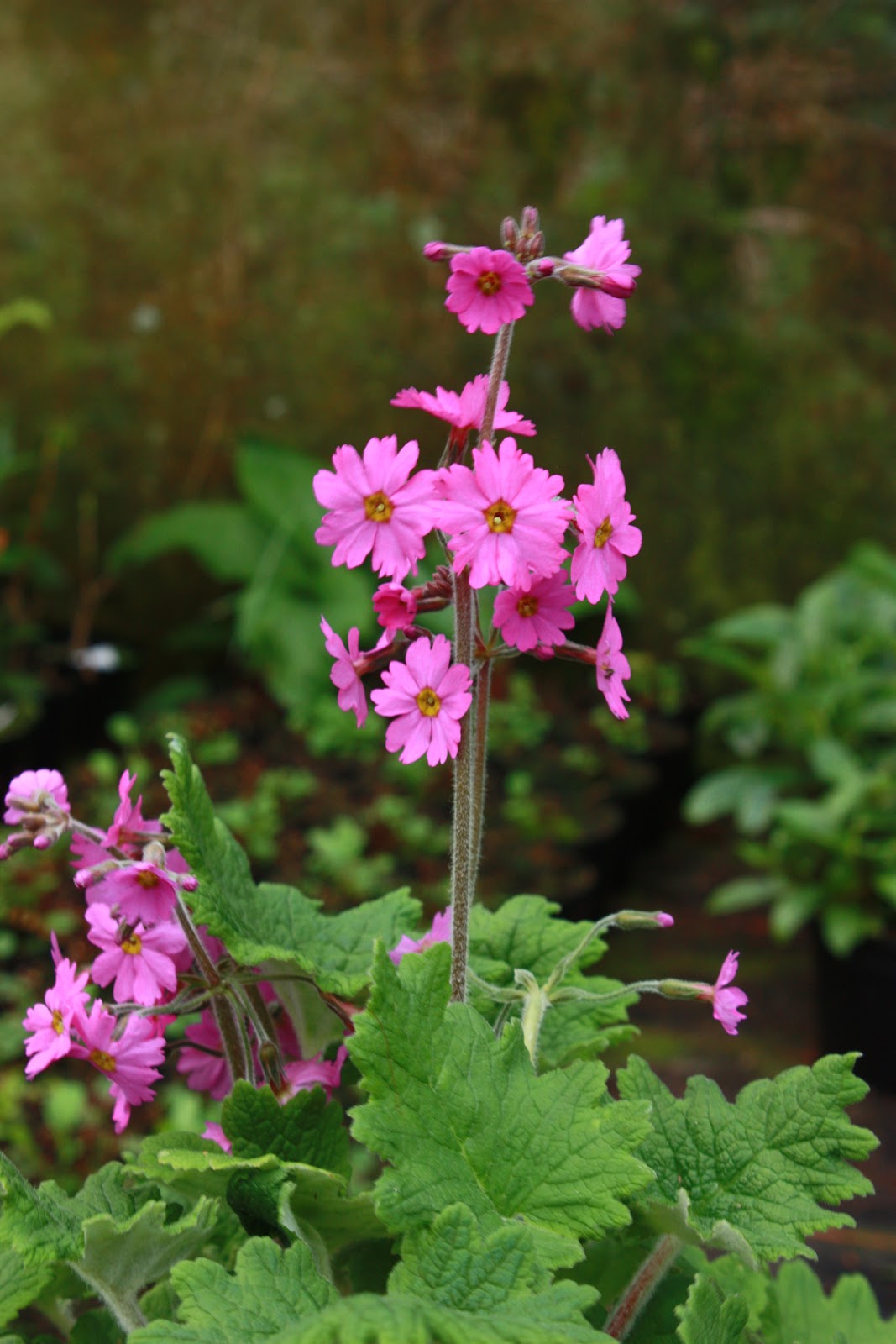
Primula polyneura- not an easy species if you don't have the right conditions.

I hope that sharing my experiences of growing plants commercially will prove interesting. Be warned though- I may shatter illusions of how plants are grown; nursery growing is hard work, everything is practical, everything is efficient... Here you will see how it is done.

One thing, though: this is my blog and does not necessarily represent the views of my employers- granted I often think they should agree with me... but views expressed here will be my own!

So time to get started.

Ben